

Why Storybooks Are Some of the Most Powerful Tools for Whole Child Development
Twenty-two eager children, 20 lessons, 12 pinwheels, nine lemon slices, 10 weekdays, eight stuffed animals and probably a partridge in a pear tree.
I would not be surprised if I found a partridge while organizing my supplies back at the office.
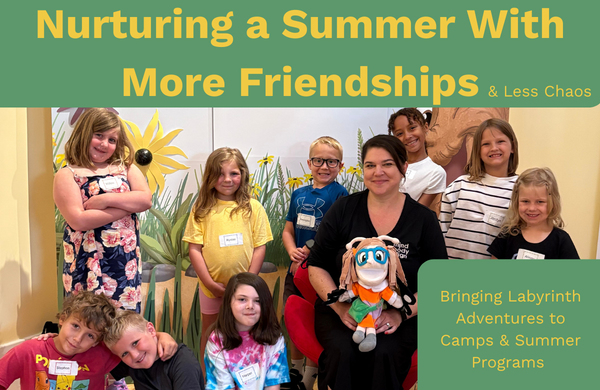
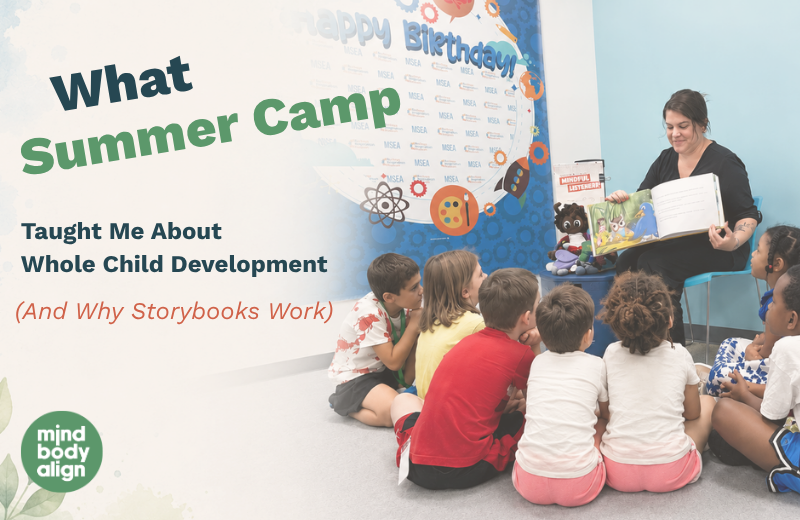
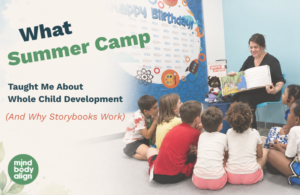
I am unpacking, and unwinding, from two weeks of summer camp filled with storybooks, new faces, movement, laughter, activities, and many small moments of growth. Somehow, the busiest hour of my day also became the most peaceful.
The Quiet Power of One Deep Breath
Twice a day, I had the opportunity to sit down, take one deep breath, and simply be still. We often forget to give ourselves permission to do that. Every lesson began the same way: one big breath in…and then slowly out.
When I admitted to the older campers that this was my favorite part of the day, several of them immediately nodded and signed, “Me too,” with their hands. Their flushed, sweaty faces reflected the energy they had just spent exploring the museum, playing outside, and moving from one exciting activity to the next.
That single breath did not erase all that energy, but it helped us settle into it. It was like your mind taking a long drink of water after it has been running just as hard as your body.
This was the third summer that Richland Public Health and Buckeye Imagination Museum invited Mind Body Align to bring the Labyrinth Adventures whole child development program to its day camp, and I was thrilled to return as the instructor.
Summer Camp Looks Different Than the Classroom
These storybook-based whole child development lessons are the same ones we use in classrooms, libraries, museums, and afterschool programs to help children build attention, emotional regulation, empathy, and confidence, but summer camp has its own special rhythm.
It is summer break. We may have stayed up too late, gotten a little sunburned or bug-bitten, and fallen completely out of our normal routines. Then we are all brought together inside a bright, colorful children’s museum buzzing with activity and happy noise, and asked to settle down long enough to hear a story, reflect, and learn something new. It is a tall order.
I do not expect a few brief lessons in the middle of summer to create one dramatic, life-changing breakthrough. We are simply planting seeds. Like anything worth learning, these skills take practice, repetition, and a little growing up.
But wow, the breakthroughs sneak up on you.
Small Moments Create Lasting Growth
I see it when the campers begin taking that opening breath before I ask them to (and sometimes a couple more). They realize that it actually feels pretty good.
I hear it when new words naturally find their way into conversation. One day, everyone was coloring quietly and the soft scratching sound of crayons across their activity pages filled the room.
“I love the sound of crayons on paper,” I said.
Without missing a beat, one camper looked up and said, “That’s mindful hearing. Good job!”
Absolutely. I smiled to myself. There it was. One tiny seed had already started to sprout.
Growth Doesn’t Always Look Like Participation
Another day, one little girl spent most of the story looking away from me. If I had stopped paying attention there, I might have assumed she just wasn’t interested. But while everyone worked on their activity pages, I sat down beside her. Suddenly she was chatting, explaining her activity page, and telling me all about herself.
She didn’t need to participate in front of the group. She just needed someone to meet her where she was. Another sprout.
Those little moments were everywhere. Some children remembered breathing exercises they learned months ago when we brought Labyrinth Adventures to their schools. They described empathy as asking a friend, “You good?” or making a silly face to cheer someone up. The lesson on positive self-talk immediately clicked when we compared encouraging thoughts to video game power-ups. (At least, I hope that is what they’ll remember rather than me clumsily jumping up and down with them.)
Sprout.
Whole Child Development Isn’t About Perfect Behavior
Not every camper loved every activity, and not every discussion turned into a profound conversation. I don’t think I would want them to.
Kids are kids. Some were eager to soar down the hallway pretending to be eagles. Others wanted absolutely nothing to do with that game. That’s okay. These thirty minutes aren’t about perfect participation. They’re about giving children stories, words, and simple tools they can tuck away until the day they need them.
Maybe that’s why I love teaching at summer camp so much. The museum is loud. The days are busy. The kids are wonderfully wiggly. And right in the middle of all that happy noise, we slow down, breathe in…and then out.
We water those seeds.
Small Seeds. Lifelong Growth.
Every thoughtful routine, meaningful conversation, and supportive space helps children build the skills they’ll carry with them long after they leave.
If you enjoyed this article, join our mailing list for practical ideas, inspiring stories, and whole child development resources created to support educators, families, and the children they serve.
We’d be honored to continue learning alongside you.
Join the Mind Body Align Community
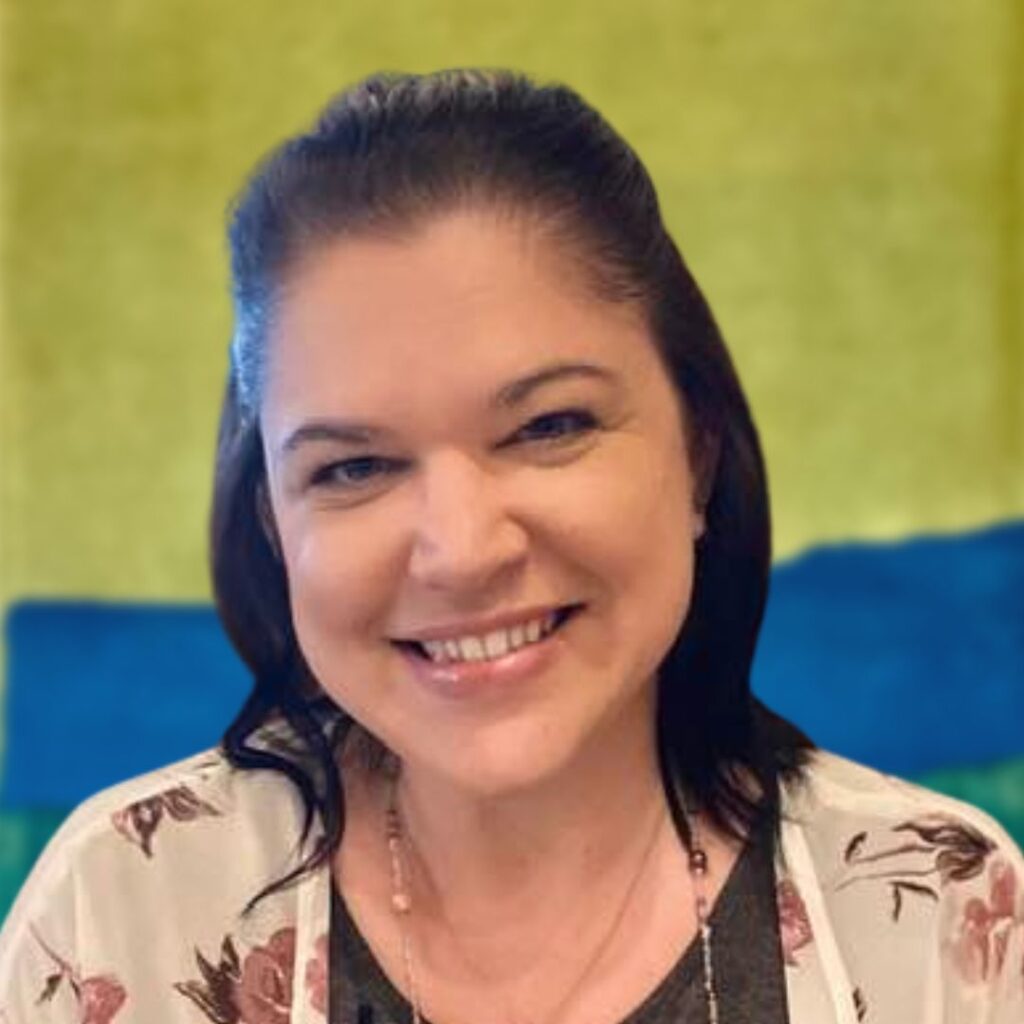
Brooke Unger is an educator with Mind Body Align. She earned a degree in Educational Assisting and a Behavior Management certificate from North Central State College. Her experience as an elementary school teacher’s aide showed her how attentional training, relationship-building, self-regulation, and practical life skills can positively transform a classroom. Brooke now writes articles and teaches young children while supporting Mind Body Align’s mission to create successful learning environments. She lives in Bellville, Ohio with her husband and two daughters.