


Listen or Download Article Audio
Because sometimes the biggest life lessons happen between hidden blankets and missing shoes.
As a mom, a classroom teacher and someone who teaches social-emotional learning (SEL) to children and adults, I’ve learned something important: Some of the most meaningful SEL moments happen when we least expect them.
Usually when we’re running late. Or someone loses a tooth. Or a child is having a complete meltdown because her sister hid her blankie. (For the record, this is the same blankie she took to college thousands of miles away.)
Here’s the thing: We don’t need a perfectly planned lesson, an activity that creates a dazzling hallway display, or an extra 30 minutes in our already packed schedules to help children build important social-emotional skills. Sometimes, all we need is an ordinary moment and a willingness to pause.
How Can You Teach Social-Emotional Learning in Everyday Life?
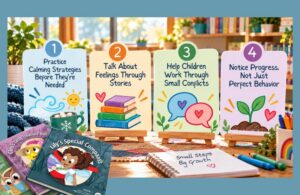
Social-emotional learning can happen during ordinary activities like sharing toys, handling disappointment, getting ready for school, or talking about the day. Adults can help children build these skills by naming emotions, modeling calming strategies, practicing problem-solving, and noticing acts of kindness. Small, repeated experiences give children opportunities to use these skills in real situations.
Why Do Children Need Practice With Emotional Skills?
We expect children to share, manage disappointment, communicate their feelings, and make thoughtful decisions. But these are skills, just like reading or riding a bike. And nobody learns to ride a bike without a few wobbles.
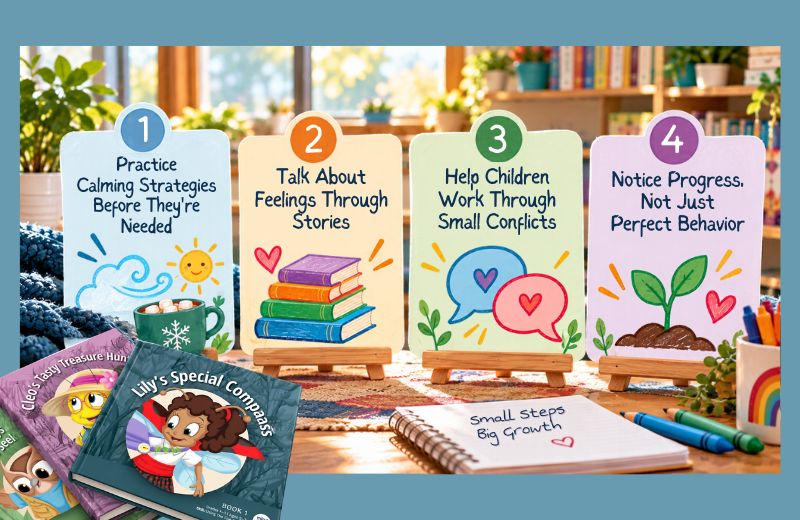
When I teach Labyrinth Adventures, Mind Body Align’s story-based social-emotional learning curriculum, I use relatable characters and everyday challenges to help children explore feelings, relationships, and choices.
The beauty is that those lessons don’t have to stay inside a storybook. They can show up anywhere. Including during a household search for a missing blankie.
Teaching Sharing and Problem-Solving: The Great Sharing Showdown
Picture this: Two children want the same Barbie. One grabs it. The other screams. Suddenly, everyone is involved, including the adult who just wanted to finish her coffee.
Sound familiar?
Instead of immediately solving the problem, we can help children notice what’s happening, name the feelings, and talk about a solution. We might say, “You both want the same toy, and you’re both frustrated. What can you do so everyone has a chance to play?”
Maybe they take turns. Maybe they find another toy. Or, maybe they need a moment before they’re ready to think clearly and problem-solve. We’re teaching emotional awareness, communication, and decision-making. And yes, sometimes we’re teaching ourselves patience, too. Especially when someone knows exactly where that missing blanket is. And she isn’t talking.
Helping Children Handle Disappointment When Things Don’t Go as Planned
A child loses a soccer game. A favorite activity gets canceled. Someone doesn’t like the vegetable you served for dinner. Or a beloved blanket mysteriously disappears.
Disappointment is part of life, but learning how to handle it takes time. Instead of rushing to fix everything, we can start by acknowledging their disappointment and recognizing how much they were looking forward to something. Then, we can offer simple choices, like taking a few breaths, stretching, or taking a short walk. When children feel heard, they’re often better able to consider what might help them move forward.
The Labyrinth Adventures storybook program, introduces simple breathing and self-regulation strategies children can use when big feelings show up. The goal isn’t to make every uncomfortable feeling disappear. It’s to help children recognize their emotions and discover what helps them. Although, admittedly, finding the blanket would also help.
Model Emotional Regulation in Everyday Moments: Let Them See You Being Human
This might be my favorite one. Children learn so much by watching us, which is wonderful until we realize they’re watching us ALL THE TIME. Including when we’re stuck in traffic, waiting in line at the grocery store, running behind schedule, or haven’t had our coffee yet.
I’ve found that some of the most powerful SEL moments happen when adults model their own strategies. When we’re running late and feeling frustrated, we can model taking a breath, pausing, and calmly figuring out what to do next.
That’s it. No fancy lesson plan required.
We’re showing children that adults have big feelings, too, and that we can respond thoughtfully. And when we don’t handle something the way we hoped? We can model apologizing, and beginning again.
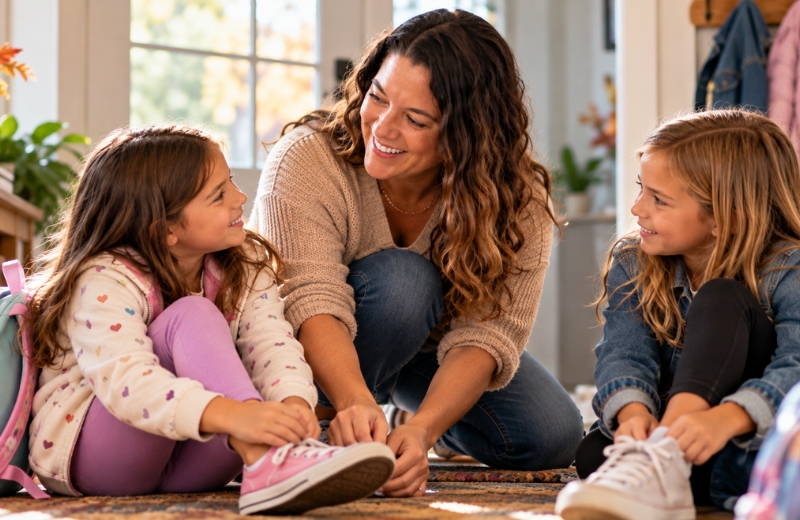
And believe me, I’ve had plenty of opportunities to model this. I once took my daughter all the way to school without shoes on her feet. Apparently, getting everyone out the door was the priority that morning. Footwear was optional.
Sometimes all we can do is laugh, take a breath, and figure out what comes next. That’s a pretty important lesson.
Celebrate Everyday Kindness and Connection
SEL isn’t only about managing challenging moments. It’s also about noticing kindness, gratitude, friendship, and joy. When a child helps someone pick up a spilled pencil box, notice it: “You saw someone needed help, and you stopped what you were doing to help them. What a kind thing to do!”
At dinner, ask everyone to share something that made them smile. During classroom transitions, invite children to notice one kind thing a classmate did. These tiny conversations build awareness and connection. And they take less time than finding the blanket that her sister hid somewhere in the house.
Small Moments, Big Impact
As both a teacher and a mom, I know life gets busy. Some days we’re doing great just getting everyone where they need to be and wearing shoes. And the good news is, social-emotional learning doesn’t have to be another thing on our to-do list.
It’s already happening in our homes, classrooms, playgrounds, and communities. Our job is to notice opportunities to give children language for what they’re experiencing, and help them build skills one moment at a time. Because raising emotionally aware, compassionate, resilient children doesn’t happen in one big lesson.
It happens in hundreds of little moments.
Even the ones involving missing blankets, missing shoes, and a mom who really just needed her coffee.

Julie Braumberger is Director of Education at Mind Body Align, a former third-grade teacher, and co-creator of Labyrinth Adventures. She draws on her classroom experience to develop practical whole child development resources that help children build self-regulation, emotional awareness, connection, and other skills they can use in school and beyond.