


Listen or Download Article Audio
What New Attendance Research Means for Elementary Educators
As a teacher and a mom, I’ve learned that sometimes the smallest moments make the biggest difference in a child’s day.
A greeting when they walk through the classroom door. A friend saves them a seat. A teacher notices that something doesn’t seem quite right.
These moments might not seem like much, especially when we’re juggling lesson plans, assessments, schedules, and the hundred other things that happen before lunchtime. But for a child, they can mean everything.
They send a simple message: You belong here.
And according to new research highlighted by the Collaborative for Academic, Social, and Emotional Learning (CASEL), that feeling of connection may be more important than we realize.
In its October 2026 Data-Driven Research Quarterly, CASEL shared findings about chronic absenteeism and the role school climate, relationships, and student connectedness may play in attendance.
The research raises an important question for educators: What if helping children want to be at school begins with helping them feel like they belong?
Why Is a Sense of Belonging Important at School?
A sense of belonging helps children feel welcomed, accepted, and connected to their school community. When children know their teachers and classmates care about them, they may feel more comfortable participating, asking for help, and working through challenges.
Research highlighted by CASEL found that school connectedness, safety, and supportive learning environments were associated with lower absenteeism among middle and high school students.
While those findings come from older students, they offer an important reminder for elementary educators: relationships and classroom experiences deserve attention alongside academic learning.
What the New Research Tells Us
One of the studies featured in CASEL’s October 2026 report examined school climate and attendance among middle and high school students in Georgia.
Researchers found that students’ perceptions of connectedness, safety, and structure for learning were among the strongest school-climate predictors of chronic absenteeism.
Another study, conducted in Chicago Public Schools, found that schools where students felt safer and more connected tended to have lower absence rates, even when compared with schools serving similar student populations.
These studies don’t tell us that a morning greeting or a classroom friendship will automatically improve attendance. They also don’t establish the same outcomes for younger children.
What they do is reinforce something educators have long recognized: how students experience school matters.
And that experience is shaped by more than what appears in a lesson plan.
What Does Belonging Look Like in an Elementary Classroom?
If you ask a young child what makes school a good place to be, you probably won’t hear much about school climate or attendance data.
You might hear:
“My teacher likes me.”
“My friend plays with me at recess.”
“I got to help pass out the papers.”
“Someone asked me if I was okay.”
Children notice the little things.
For younger students, belonging can mean knowing where they fit, feeling comfortable asking questions, having someone to sit beside, or trusting that making a mistake won’t change how others treat them.
And here’s something we sometimes forget: belonging doesn’t mean every moment is happy or every interaction is easy.
Children disagree. Friendships change. Feelings get hurt. Someone gets left out of a game. Someone else says something they wish they could take back.
Those moments don’t mean a classroom has failed to create a sense of community. They give us opportunities to help children learn what being part of a community really means.
Five Everyday Ways to Help Children Feel They Belong
The good news is that building connection, helping children feel seen, heard, valued, and understood, often begins with things you’re already doing.
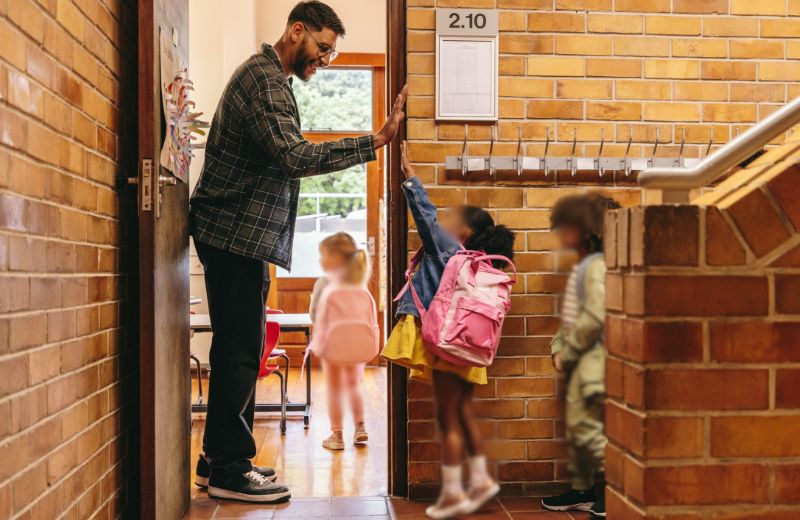
1. Make Every Greeting Count
A simple greeting can help a child feel noticed.
Use their name. Make eye contact when they’re comfortable with it. Ask about something they mentioned yesterday.
And when a child arrives having a difficult morning, remember that connection doesn’t always require a cheerful conversation.
Sometimes a quiet “I’m glad you’re here” is enough.
2. Give Children Opportunities to Contribute
Kids love feeling useful.
Whether they’re handing out materials, choosing a read-aloud, helping a classmate, or sharing an idea, meaningful responsibilities help children see themselves as important members of the group.
The key is making sure every child has opportunities to participate, not just those who are quickest to raise their hands. Simple things, like rotating classroom responsibilities and inviting quieter children to contribute, can help every child have the experience of discovering and sharing their unique strengths.
3. Use Stories to Start Conversations
One of my favorite things about reading with children is how easily a story can open the door to conversations that might otherwise feel uncomfortable.
A character feels left out. Another makes a mistake. Someone wants to join a game but doesn’t know how.
Suddenly, we’re talking about feelings, friendships, and choices without putting any one child on the spot.
Ask questions like:
- How do you think that character feels?
- Have you ever wanted to join something but weren’t sure how?
- What could a friend do to help?
- What might happen if someone made a different choice?
These conversations help children notice other people’s experiences and think about ways to support one another.
4. Make Room for Different Feelings
Not every child arrives at school excited and ready to learn.
Some are tired. Some are worried. Some are frustrated about something that happened at home or on the bus.
We don’t have to solve every problem immediately. Sometimes children simply need to know their feelings are recognized.
Instead of rushing to change how a child feels, we can say, “It looks like this morning has been hard. Would you like to tell me about it?”
That small moment of understanding can help a child feel supported.
5. Help Children Find Their Way Back After Difficult Moments
Belonging becomes especially meaningful when things don’t go as planned.
A child argues with a friend. Someone loses their patience. A classroom activity ends in tears.
Rather than treating those moments as the end of the story, we can help children repair relationships and reconnect.
“What happened?”
“How do you think your friend felt?”
“What could help make things better?”
Children need opportunities to learn that mistakes don’t mean they no longer belong.
How Can Stories Help Children Practice Belonging?
Stories give children a chance to explore feelings and relationships from a little distance.
Through the characters in a book, they can recognize emotions, consider different perspectives, and imagine how they might respond in a similar situation.
At Mind Body Align, this idea is part of the foundation of our Labyrinth Adventures storybooks. Characters encounter everyday challenges involving emotions, friendships, choices, and connection. Educators can use those moments to start meaningful conversations and practice skills together.
But the opportunity isn’t limited to any particular book.
The next time you’re reading aloud, pause when a character feels left out, misunderstood, or uncertain.
Ask, “What do you think this character needs right now?”
You might be surprised by what your students notice.
How Do We Know If Children Feel Connected?
We don’t always need a formal assessment to begin paying attention to belonging.
We can observe who joins classroom activities, who has someone to work with, who feels comfortable asking for help, and who may be spending more time alone.
We can ask children simple questions:
- What’s something you enjoy about our classroom?
- Who can you go to when you need help?
- When do you feel included?
- Is there anything we could do to make our classroom feel more welcoming?
We can also listen to families and pay attention when a child’s behavior, participation, or enthusiasm changes.
Of course, attendance is complicated. Illness, transportation, family responsibilities, housing instability, and many other circumstances can keep children out of school, even when they love being there.
A welcoming classroom cannot solve every attendance challenge.
But it can be one meaningful part of helping children feel connected to school.
Sometimes the Smallest Moments Matter Most
As educators, we spend so much time thinking about what children need to learn.
And that’s important.
We also have an opportunity to think about what children may need to feel like they belong.
Do they feel noticed?
Do they feel included?
Do they know there’s someone who cares when they’re having a hard day?
The latest research from CASEL reminds us that school relationships and connectedness deserve serious attention.
For those of us working with young children, that work often begins with the simplest things.
A welcoming smile. A shared story. A little patience. An invitation to join in.
And the message every child deserves to hear:
We’re glad you’re here.
Research referenced: CASEL, Data-Driven: A Research Quarterly for Education Leaders, October 13, 2026, Attendance Special Issue. The quarterly summarizes 2026 research by Graham, Chiang, and Choi on school climate and absenteeism, and Allensworth and colleagues on school relationships and attendance in Chicago Public Schools.

Julie Braumberger is Director of Education at Mind Body Align, a former third-grade teacher, and co-creator of Labyrinth Adventures. She draws on her classroom experience to develop practical whole child development resources that help children build self-regulation, emotional awareness, connection, and other skills they can use in school and beyond.