



Listen or Download Article Audio
Some kids come home from school ready to give you a full documentary of their day. My 9-year-old is that kid. I barely get her backpack off her before I know how quickly she completed her math facts, who she played with at recess, what flavor coffee her teacher drank, and at least three facts about random animals.
My 14-year-old? Different story. Ask too many questions right after school and you may get approximately three words.
She needs time. Time to decompress, eat something, stare into space, and stop being “on” for a little while. If we’re lucky enough to eat dinner together on a school day, she’ll often start talking then.
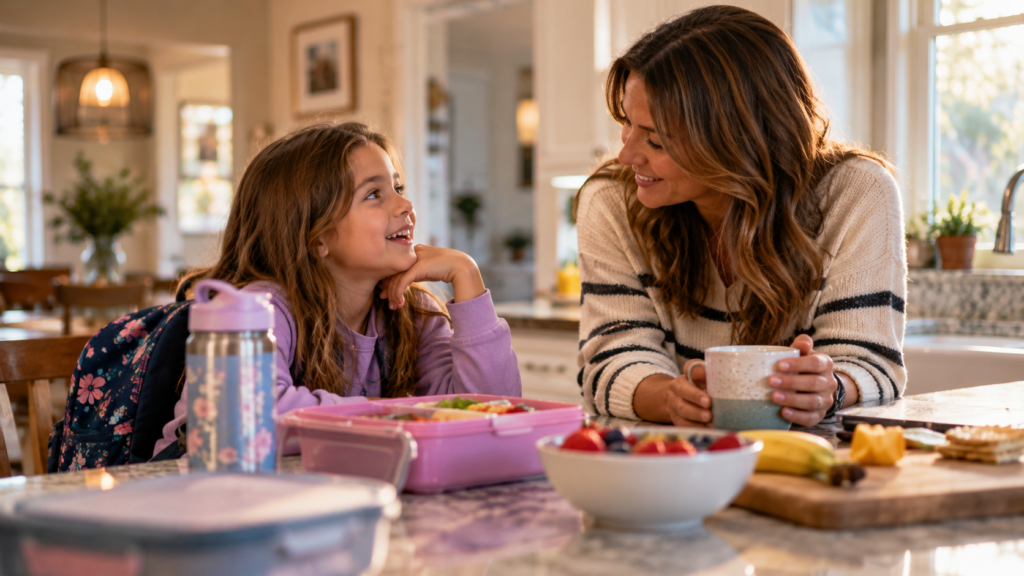
And if I catch her in the kitchen snacking after everyone else has gone to bed? Put the kettle on, she’s got tea. I love those late-night conversations. I also cannot realistically stay up late every night waiting for them.
So what do we do when “How was school?” gets us nowhere?
What Should You Ask Instead of “How Was School?”
Ask Questions that are Easier to Answer
“How was school?” is huge. “Did you have a good day?” is easy to answer with a grunty “no” or “yeah,” ending the conversation.
Instead, try questions that invite a story rather than a yes or no:
- What made you smile today?
- How was your lunch?
- When did you feel brave?
- What was the weirdest thing that happened?
- Did you notice anything about how your body felt today—tired, hungry, nervous, excited, or like you needed a break?
These questions work especially well with younger children. As kids get older, though, the questions may need to grow with them.
Questions to Ask Older Kids After School
As children get older, the questions may need to grow with them.
- Anything funny happen today?
- What’s the latest drama?
- Was anything easier or harder than you expected?
- Anything happen today that you need to vent about?
- What are you looking forward to this week?
And sometimes I don’t ask about her at all. I tell her about my day. I teach Labyrinth Adventures lessons to younger children, so I’ll share something cute a child said or something funny that happened. A story about a kindergartener learning about patience, emotions, or frustration can surprisingly turn into a wonderful conversation with my teenager.
Sometimes sharing first works better than asking another question. I’m letting her into my day and leaving room for her to let me into hers.
Sometimes, don’t ask anything
Not every child is ready to talk the second they walk through the door. Sometimes the kindest opening is simply, “I’m glad you’re home.”
Then hand them a snack.
For younger children especially, that may genuinely be enough for a while. Snack. Water. A hug if they want one.
Give them a little time to shift from school mode to home mode before asking for the play-by-play.
Create low-pressure opportunities to talk
You don’t need a formal family meeting. Have you ever noticed that good conversations often happen more naturally when everyone is doing something else? Like driving, walking the dog, folding laundry, cooking together, or getting ready for bed.
Side-by-side conversation can feel much easier than sitting across from someone and announcing, “Tell me about your feelings.”
Notice Changes Without Jumping to Conclusions
A quiet afternoon doesn’t automatically mean something is wrong.
You know your child. Notice changes in their usual patterns. Are they unusually exhausted? Irritable? Clingy? Hungry? Avoiding something they normally enjoy?
You don’t have to interpret every signal. Sometimes simply noticing a change and letting your child know you’re available is enough:
“You seem a little quieter than usual. You don’t have to talk about it right now, but I’m here if you want to.”
Then mean it. Keep the door open. The goal isn’t to get a complete report of your child’s day. It’s connection.
Some days you’ll get the whole story before you leave the school parking lot. Some days you’ll get nothing until dinner on Sunday. And some days the important conversation will happen unexpectedly, in the kitchen, well past your bedtime, over a plate of cold leftovers.
Keep noticing. Keep showing up. Keep giving them room.
And when the tea finally gets served, listen.
What Are Good Questions to Ask Kids After School?
- What made you smile today?
- What was the weirdest thing that happened?
- When did you feel brave?
- Was anything easier or harder than you expected?
- Anything happened today that you need to vent about?
- What are you looking forward to this week?
You don’t need to ask all of them. Pick one that fits your child, the moment, and their age—and let the conversation go wherever it goes.

Brooke Unger is an educator and writer with Mind Body Align with experience as an elementary school teacher’s aide. She works directly with children and shares practical strategies that help educators and families support self-regulation, emotional awareness, and readiness to learn.