

Listen or Download Article Audio
As the new school year begins, elementary educators face the exciting, and often overwhelming, task of welcoming a new group of students. We are always hoping to launch the best school year ever, and the challenge becomes: How?
One helpful place to start is by building simple social-emotional learning (SEL) practices into the classroom routine from the beginning.
Children are learning much more than academics during the school day. They are also learning how to recognize emotions, manage their responses, focus their attention, solve problems, and connect with the people around them. Giving students regular opportunities to practice these skills can support whole child development while helping create a classroom environment where students feel ready to learn and participate.
The good news is that SEL doesn’t always require another lengthy lesson.
What are easy ways to incorporate SEL into the classroom?
Research supports integrating social-emotional skill development into everyday classroom experiences. CASEL recommends intentionally supporting SEL throughout the school day, while research reviewed by the CDC has linked classroom practices that strengthen relationships, student voice, communication, and positive classroom environments with greater school connectedness.
Teachers can build social-emotional learning into everyday routines through emotion check-ins, calm spaces, movement breaks, breathing exercises, storytelling, active listening, and end-of-day reflection. These practices give students regular opportunities to develop self-awareness, self-regulation, communication, and relationship skills without requiring another large block of instructional time.
Here are 7 practical ways to build these skills into routines you may already have.
1. Create a Daily Check-In Routine
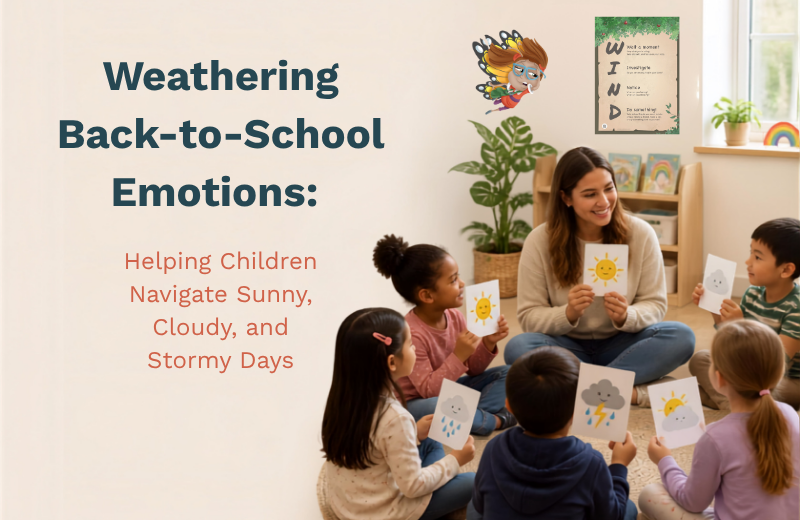
A brief Morning Emotion Check-In can help students notice how they are feeling as they begin the day.
Tip: Do a Five-Finger Emotion Check-In. Invite students to pause and notice how their bodies feel. Then ask them to rate how they are feeling using their fingers: one finger might represent very settled or low energy, while five fingers might represent very activated, stressed, or full of energy. The goal isn’t to get every student to a one. It’s to help students notice where they are.
Students can share their number or keep it private.
Follow the check-in with three slow breaths. This simple routine gives students an opportunity to notice their emotional state and practice a strategy for settling their bodies and preparing their attention for what comes next.
You can also use short reset moments throughout the day, especially during transitions or when the energy in the room begins to shift.
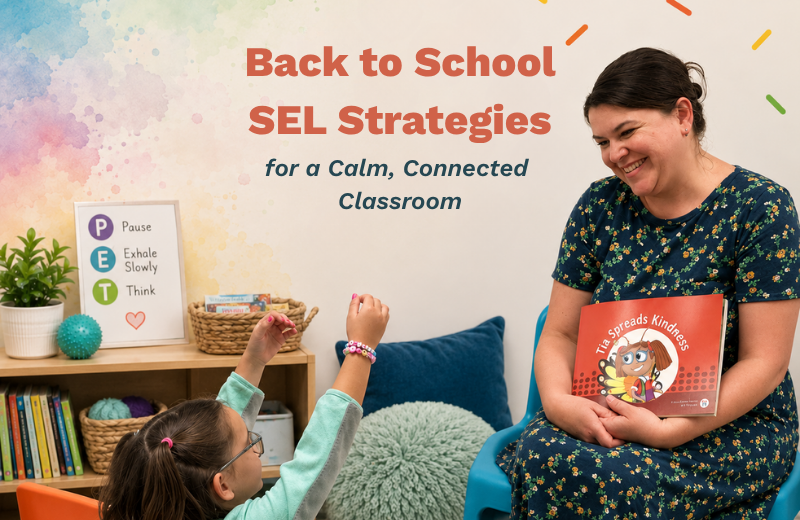
2. Create a Calm Corner or Reset Space
Create a dedicated classroom space students can use when they need a break, feel overwhelmed, or need a moment before returning to an activity.
Tip: Keep the space simple. Comfortable seating, calming visuals, a breathing ball, stacking stones, or noise-reducing headphones may be useful options.
Most importantly, teach students how and when to use the space. A reset area is most helpful when children understand that it isn’t a punishment or a way to avoid work. It’s a place to use a strategy, take a short break, and return when they are ready.
3. Add Short Movement Breaks
Movement can help students release energy, reconnect with their bodies, and prepare their attention for the next activity.
Tip: Lead the class in a few simple stretches, shoulder rolls, slow movements, or a quick shake-out. Ask students to notice how their bodies feel before and after they move.
Movement breaks don’t need to be long. Even a minute between activities can give students a chance to reset without taking significant time away from instruction.
4. Teach Simple Breathing Techniques
Breathing exercises are easy to practice almost anywhere and give students a tool they can eventually use independently.
Tip: Teach Five-Finger Breathing. Students hold up one hand and slowly trace it with the pointer finger of the opposite hand. They breathe in while tracing up a finger and breathe out while tracing down.
Practice breathing strategies during calm moments, not only after a student is already upset. The more familiar a strategy becomes, the easier it may be for a child to remember when they actually need it.
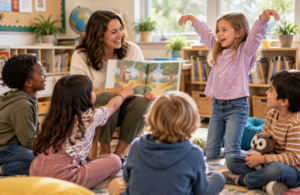
5. Use Storytelling to Practice SEL Skills
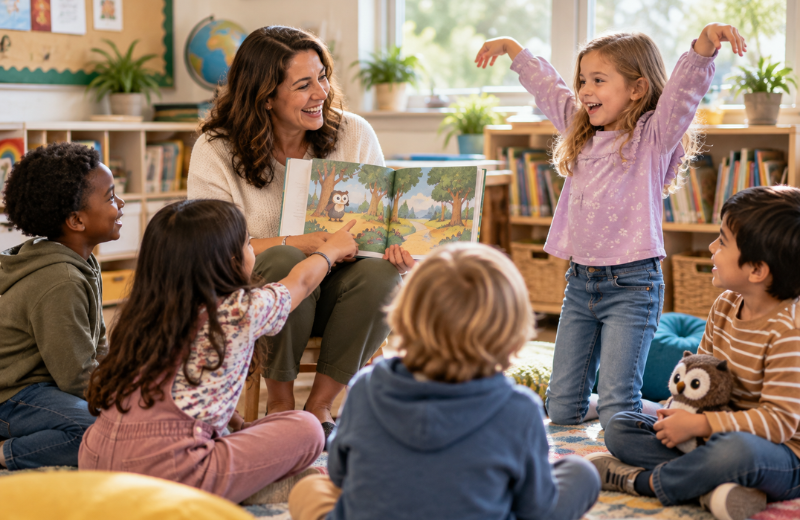
Stories give students a safe way to explore emotions, relationships, challenges, and choices through someone else’s experience.
Tip: Read a story in which a character faces a relatable challenge. Pause afterward and ask:
- How do you think the character felt?
- What clues helped you figure that out?
- What could the character try next?
- Have you ever experienced something similar?
Mind Body Align’s Labyrinth Adventures storybooks and lessons use storytelling to help children explore self-regulation, empathy, problem-solving, relationships, and other social-emotional skills through relatable characters and simple activities.
The conversation doesn’t have to be long. A few thoughtful questions can help students connect what happened in a story to situations they may encounter in their own lives.
6. Practice Active Listening and Respectful Communication
Listening is an important relationship skill, and like any other skill, children need opportunities to practice it.
Tip: During circle time or classroom discussions, have students take turns sharing while others listen. A talking stick, classroom object, or simple hand signal can indicate whose turn it is to speak.
Talk about what active listening looks like: allowing someone to finish, paying attention to their words, asking a relevant question, and responding respectfully.
CDC’s research review identified peer connection and support, student autonomy and empowerment, teacher caring and support, and management of classroom social dynamics among the classroom approaches associated with stronger school connectedness.
7. End the Day with Reflection
The end of the school day is a natural time to pause and notice what happened, not just academically, but socially and emotionally too.
Four End-Of-Day SEL Reflection Questions
- What is something you enjoyed today?
- What felt challenging today?
- What are you proud of today?
- What is something you want to try tomorrow?
Reflection helps students develop self-awareness and recognize that challenges, successes, relationships, and emotions are all part of learning.
Start Small: You Don’t Need to Do All Seven
You do not need to implement all seven ideas on the first day of school.
Choose one or two practices that fit naturally into your classroom and repeat them until they become familiar. Maybe that means three breaths after morning announcements, a movement break before math, or a quick reflection before dismissal.
The goal isn’t to create a perfectly calm classroom. Classrooms are filled with children, after all! The goal is to give students regular opportunities to practice the skills that help them learn, participate, solve problems, and connect with others.
By making SEL part of the everyday classroom routine, we support the whole child while helping build a learning environment where students—and teachers—can begin the year feeling supported and ready to grow.

Julie Braumberger is Director of Education at Mind Body Align, a former third-grade teacher, and co-creator of Labyrinth Adventures. She draws on her classroom experience to develop practical whole child development resources that help children build self-regulation, emotional awareness, connection, and other skills they can use in school and beyond.