


Listen or Download Article Audio
Think Outside the Lunchbox: 7 Back-to-School Tips That Have Nothing to Do With School Supplies
Back-to-school season comes with plenty of lists. And I love a good list, or rather, checking items off said list. Pencils, folders, new shoes, water bottles, and somehow the one very specific notebook your child needs is always sold out.
We spend a lot of August preparing the stuff. But getting ready for school is also about preparing the people.
How Can Parents Help Kids Adjust to Going Back to School?
A new school year brings changes in routines, expectations, and emotions for kids of every age. Here are seven ways to make those transitions a little more manageable, for them and for us.
1. Practice School Transitions, Not Just the Routine
Instead of only practicing “wake up, get dressed, pack your backpack,” think about the emotionally tricky handoffs: saying goodbye, getting on the bus, or moving from summer freedom to a structured day. Talking through what happens next can make the unfamiliar more predictable.
This applies to children of all ages. While it may feel more necessary with a kindergartener, my freshman needed to run through plenty of “what if” scenarios, too. New building or new classroom, change is still change.
2. Talk About Back-to-School Feelings Before They Arrive
Give children permission to be excited and nervous, happy to see friends and sad that summer is ending. Mixed feelings are normal.
Instead of “Don’t be nervous,” say, “It’s okay to feel nervous. What could help if you feel that way?” We’re helping kids recognize uncomfortable emotions and know they can handle them.
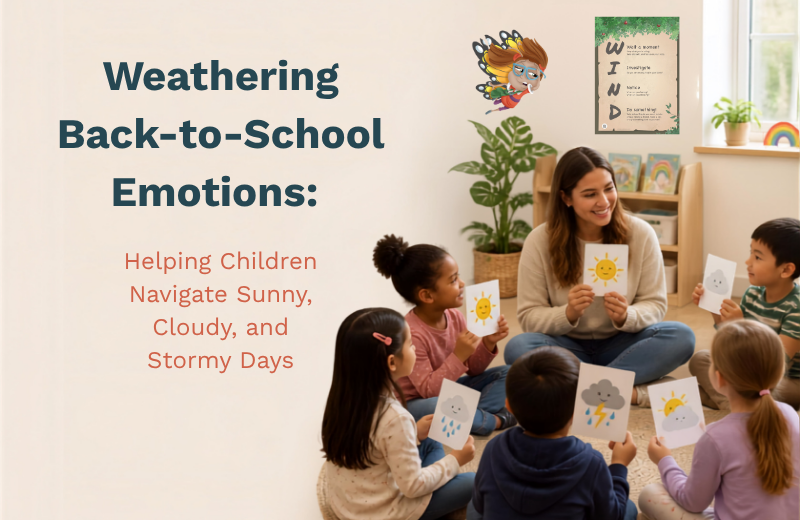
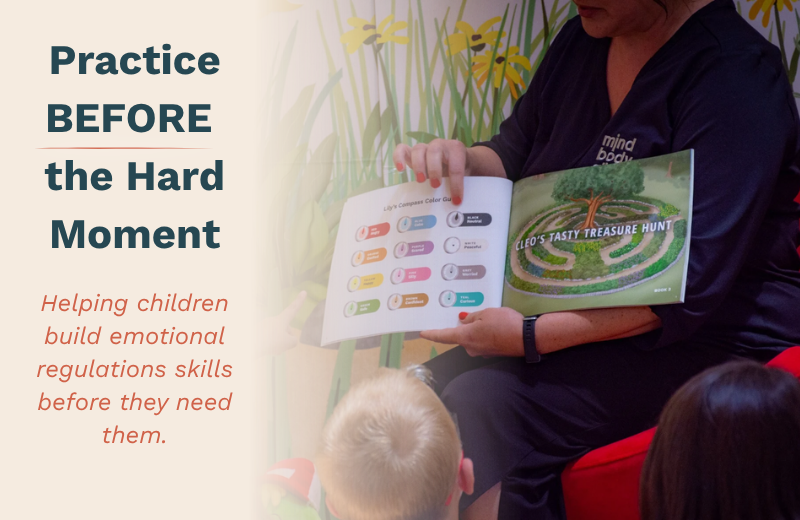
In Lily’s Cloudy Feelings, part of Labyrinth Adventures, children are reminded that big feelings are normal. They can feel heavy and hard to handle in the moment, but they don’t last forever. Like clouds, feelings come and go, and with a little practice, children can learn to notice them, name them, and let them float on by.
3. Choose one calming strategy together.
Not seven techniques. One.
Practice a breathing exercise, grounding activity, or positive phrase before it’s needed. A familiar strategy is easier to remember during a stressful moment.
Before state testing one year, my daughter’s third-grade teacher asked families to make good-luck bags. Along with pencils and mints, I added cards with simple breathing exercises. On one I drew a birthday cake: Take a deep breath in, puff up your cheeks, and gently blow out the candles.
This year, while packing her backpack, I was delighted to find a birthday cake breathing card she’d drawn herself tucked into her supply case.
The tools we practice can stick.
4. Plan for the after-school crash.
Kids spend all day navigating expectations, people, noise, learning, and emotions. Then we pick them up and immediately ask, “HOW WAS YOUR DAY? WHO DID YOU SIT WITH? WHAT DID YOU LEARN?”
Give them a minute. And feed them.
It doesn’t have to be fancy: Goldfish crackers in the car, or veggies and dip or string cheese front and center in the fridge. Make food and water easy to find and eat.
After pickup on the first day this year, my fourth grader wiped away her tears and said, “Thank you for bringing me food. I needed it and my body didn’t know how to tell me.”
Sometimes regulation starts with a snack.
5. Create a Simple After-School Decompression Ritual
What signals, You’re home. The school day is over?
Maybe it’s quiet time, sing-along music in the car, going outside, or coloring. One of my favorites is what we call The Mr. Rogers: change your shoes, change your clothes. You’re home now. Leave the school-day stuff behind.
There’s no correct ritual. You’re simply creating a predictable place to land.
6. Give Kids Something Small to Look Forward To
Taco Tuesday. A favorite show. Walking the dog together. Library night. Picking the dinner music. Even that simple after-school snack can count.
Look for little bright spots that make hard days easier, not more work for yourself.
7. Lower the Bar During the First Weeks of School
The first few weeks are an adjustment for kids, parents, and teachers.
Dinner might be cereal. Someone will forget a water bottle. A child who held it together at school may fall apart at home. Your carefully planned morning routine may implode by Wednesday.
During the first week, I pack lunches and take over a few of my kids’ chores, small things that make an exhausting week easier.
Success isn’t executing the plan perfectly. It’s giving everyone time to find their rhythm.
Come Back to These Tips Whenever Kids Need a Reset
These aren’t just first-week-of-school tips. Come back to them in October, after winter break, during testing season, or whenever life starts feeling chaotic.
Ask: Are transitions getting hard? Are we practicing our calming tools? Are we just hungry? Is there time to decompress? Is there something joyful ahead? Do we all need a little more grace?
Back-to-school preparation isn’t only about what’s packed in the backpack. Sometimes the best preparation is helping kids, and ourselves, feel ready for whatever the day brings.
Here’s to a school year filled with growth, connection, plenty of snacks, and, hopefully, a whole lot of joy.

Brooke Unger Educator at Mind Body Align. She earned a degree in Educational Assisting and a Behavior Management certificate from North Central State College. Her experience as an elementary school teacher’s aide showed her how attentional training, relationship-building, self-regulation, and practical life skills can positively transform a classroom. Brooke now writes articles and teaches young children while supporting Mind Body Align’s mission to create successful learning environments. She lives in Bellville, Ohio with her husband and two daughters.