

Listen or Download Article Audio
Simple ways to build self-regulation, attention, and emotional awareness into the start of the school day—with ideas from Labyrinth Adventures.
Some mornings in my third-grade classroom began beautifully. Students walked in ready to learn, backpacks were put away, and everyone seemed to settle into the day. Other mornings? Not so much. Someone couldn’t find their homework. Two friends had argued on the bus. A student was worried about a test. Another had enough energy for the entire class.
After many years of teaching third grade, and now as a mother of college-age daughters, I know that big feelings don’t disappear as children grow. The situations simply change. A third grader may be worried about recess while a college student is anxious about an exam, roommate issue, or internship interview.
How Can Teachers Help Students Get Ready to Learn in the Morning?
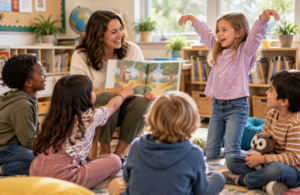
Teachers can help students get ready to learn by beginning the day with short activities that support attention, self-regulation, emotional awareness, and connection. Gratitude check-ins, focused listening, movement, art, breathing, and brief pauses can help children notice what they’re experiencing and prepare for the learning ahead.
Why Morning Classroom Routines Matter
One thing remains important at every age: learning to pause, notice what we’re experiencing, and choose what we need next. That’s at the heart of the whole child development skills we teach through Labyrinth Adventures. I often explain to teachers that children don’t need to sit perfectly still to develop self-regulation, attention, emotional awareness, and relationship skills. In fact, some of the best learning happens through stories, imagination, movement, conversation, and play.
5 Morning Activities That Build Self-Regulation, Attention, and Emotional Awareness
1. Begin the School Day with Gratitude
A gratitude practice doesn’t need to be complicated. Give students a minute to think of something they appreciate, write it down, draw it, or share it with a partner. You can also try a Blossoms, Buds, and Brambles check-in:
Ask students to identify a blossom, which is something good happening in their lives, and then a bud, which is something they’re looking forward to, and a bramble, or something that may be bothering them.
The goal isn’t to insist that everyone feel positive. It’s to help children recognize that different experiences and emotions can exist at the same time.
As a mother, I’ve found this remains true even with my daughters away at college. A phone call can include excitement about a great class and frustration about something that happened with a roommate. We don’t have to fix the bramble to appreciate the blossom.
2. Give Students Something to Focus On
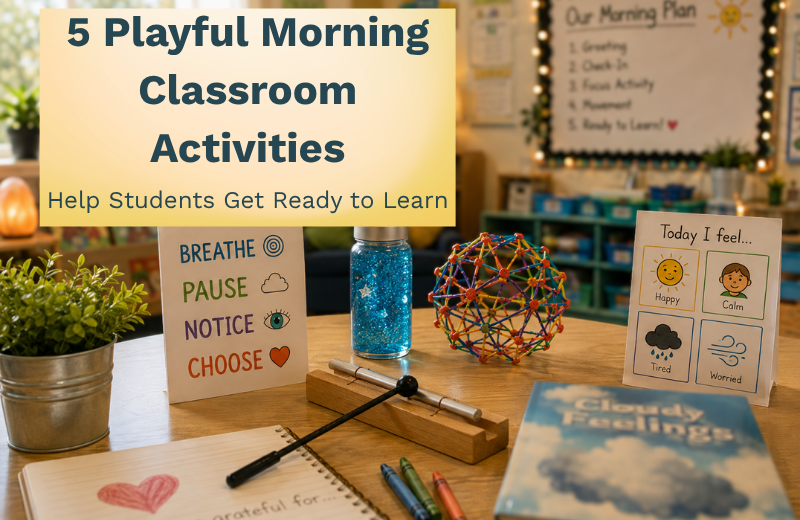
Young children often benefit from something concrete that helps them bring their attention to the present moment. Ring a bell, or use any chime or sound already available in your classroom, and invite students to listen until they can no longer hear the sound. Use a Hoberman Sphere to demonstrate slow breathing. Or create a sensory jar students can watch as the glitter gradually settles.
You can make the activity playful by asking: How long can your explorer ears hear the bell? What do you notice as the glitter settles? Does your body feel any different after three slow breaths? There isn’t a required answer. The skill is learning to notice.
3. Build a Short Pause into Your Morning Routine
Children move quickly through their school day. Arrival, announcements, reading, math, specials, lunch, recess. Sometimes we expect their attention to move just as quickly. A short pause can help students prepare for the next experience.
Do a 30-second classroom reset. Students can take several slow breaths, stretch, notice three sounds in the room, or simply check in with how their bodies feel. As a teacher, I learned that sometimes slowing down for a minute actually gave me more productive teaching time afterward.
4. Use Art to Give Feelings a Voice
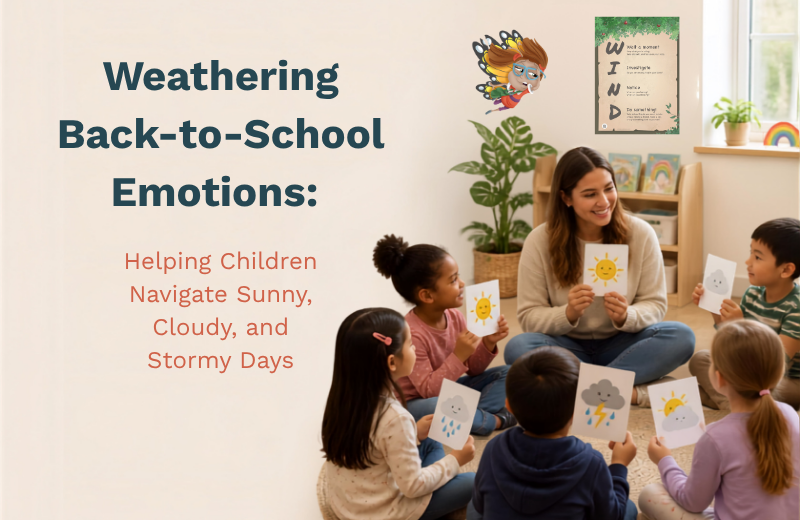
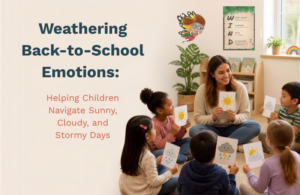
Not every child is ready to answer, “How are you feeling?” out loud. Art provides another pathway. Invite students to draw their mood as weather. Maybe today feels sunny, cloudy, windy, or stormy. Ask them to choose a color that represents how they feel or draw what their thoughts might look like.
This connects beautifully with the lesson in Lily’s Cloudy Feelings. Children learn that feelings don’t have to be labeled good or bad. Like the weather, they can change. Some of my third graders could tell me far more through a picture than they ever would have shared during a class discussion.
5. Use Movement Before You Expect Stillness
Children are designed to move. Instead of fighting that energy first thing in the morning, use it. Do some stretching, marching, balancing, reaching, or pairing simple movements with breathing. Invite students to move like one of the Labyrinth Adventures creatures, a light butterfly, bouncing grasshopper, soaring eagle, or observant owl. Every movement can be adapted for children who prefer or need to remain seated.
Movement isn’t simply about “getting the wiggles out.” It gives children another opportunity to notice their bodies, adjust their energy, and prepare themselves for what’s coming next.
Start with the Child, Then Start the Lesson
Over the years, I learned that I couldn’t always control what my students carried through the classroom door. The same is true as a parent. Even now, I can’t solve every challenge my daughters encounter away from home.
What we can do is give children tools. We can teach them to pause. To breathe. To notice. To move. To listen. To recognize their emotions and decide what might help.
That’s what whole child development looks like in everyday life, and sometimes it begins with nothing more complicated than a bell, a crayon, a deep breath, or a good story.
Before we ask children to be ready to learn, we can help them discover how to get themselves ready.

Julie Braumberger is Director of Education at Mind Body Align, a former third-grade teacher, and co-creator of Labyrinth Adventures. She draws on her classroom experience to develop practical whole child development resources that help children build self-regulation, emotional awareness, connection, and other skills they can use in school and beyond.
As an Amazon Associate we recommend our favorite teacher products and earn a small commission from qualifying purchases you make through the links in this article.