



Listen or Download Article Audio
As a third-grade teacher, I heard two words almost every day: “I can’t.”
I can’t solve this math problem. I can’t read that book. I can’t draw that. I can’t stand up in front of the class. I can’t do it!
After more than 20 years in the classroom, and raising children of my own, I learned that confidence rarely appears because an adult tells a child, “You can do it.” Confidence is built more slowly.
How Do Children Build Confidence?
Children begin to believe in themselves when they have experiences that show them, “That was hard and I did it!” Sometimes those successes are so small that adults barely notice them. But children do.
Those experiences help them discover their capabilities.
Confidence Grows One Small Step at a Time
In my classroom, I watched students struggle with everything from multiplication to reading aloud. It was tempting to jump in and help, especially when I could see frustration building.
Over time, I learned to give children a little room to wrestle with the challenge. Not so much that frustration becomes overwhelming, but enough that they have an opportunity to discover what they can do. For example, a student may not finish the entire math page, but they solve the problem that had them stumped, a reluctant reader finally finishes one page independently, or a child who rarely raises their hand quietly offers an answer.
These moments matter!
Rather than simply praising the finished result, I wanted children to recognize the small steps that helped them get there. I gave them the opportunity to feel the satisfaction of sticking with something when it was hard, using their ingenuity to find a different way forward, discovering their courage to ask for help when they needed it, or experiencing the sense of accomplishment when they completed something independently that once required support.
I wasn’t celebrating perfection. I was helping children learn problem solving, notice their own growth, and recognize that they were capable of doing hard things.
What should the adult say when one of these small successes happens?
Instead of:
“Great job!”
Help the child connect the result with what they did:
“You stuck with that even when it was frustrating. Great job!”
“You found another way when the first way didn’t work. Good thinking!”
“You asked for help when you needed it. Smart choice!”
“Yesterday you needed help with that part. Today you did it on your own. Awesome job!”
Specific feedback helps children notice the actions and progress behind the success, not simply whether an adult approves of the result.
Confidence Also Grows When Things Don’t Go as Planned
This is something I love about Labyrinth Adventures. The characters don’t always know exactly what to do. They encounter frustration, mistakes, waiting, worries, and unexpected problems, the same kinds of experiences children encounter every day.
In Lily’s Messy Masterpiece, things don’t turn out exactly as Lily hoped. That creates an opportunity for children to think about what happens when their idea of “perfect” gets in the way of enjoying what they’ve created.
And in Oliver’s Waiting Game, waiting is difficult. Oliver’s experience reminds children that success isn’t always about getting what they want immediately. Sometimes success takes patience and waiting a little longer than they expect.
These stories give adults an opening to ask an important question: “What did the character do when things got hard?” Then, when the situation arises, children may ask the same question about themselves.
The Small Wins Matter at Home, Too
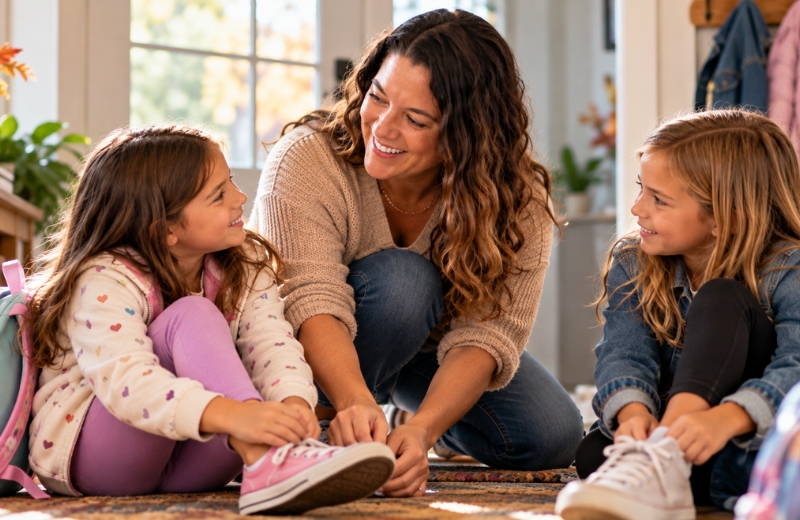
I saw this with my own daughters as they grew up. As parents, it can be incredibly tempting to make the path easier. We know how to tie the shoe, fix the project, make the phone call, solve the math problem, or sound out the word and doing it for them would usually be faster.
It takes thoughtfulness, and digging into patience, to wait. That has gotten harder for me as they’ve gotten older. Their problems feel a lot bigger. Today, with two college-age daughters, I know it’s best not to, and sometimes I can’t, solve every challenge for them. The years of small opportunities to attempt, stumble, problem-solve, ask for help, and start again have become important preparation for the bigger decisions they are making on their own.
How Can Adults Help Children Build Confidence?
Give children opportunities to do manageable things for themselves and allow them to discover what they can do when something isn’t easy.
- Give them a moment before stepping in.
- Ask them “how” or “what” questions to help them problem solve.
- Help them break a difficult task into a smaller next step.
- Notice specific progress.
- Teach the children that asking for help is ok.
- Let mistakes become an opportunity to learn.
- Remind them of something difficult they’ve handled before.
- Celebrate starting again.
From “I Can’t” to “I Did”
A confident child knows they can keep moving forward, even when something feels difficult. They can pause, take a small step, ask for help, practice, or find another way. They also learn that mistakes are part of it and that they can keep going when things don’t go as planned.
Over time, encouraging children to have these small experiences will add up to the moment when instead of the child saying, “I can’t,” they see something they accomplished and say two very different words: “I did.”
Those two words may seem small, but they hold something much bigger: the growing belief that I can do hard things.

Julie Braumberger is Director of Education at Mind Body Align, a former third-grade teacher, and co-creator of Labyrinth Adventures. She draws on her classroom experience to develop practical whole child development resources that help children build self-regulation, emotional awareness, connection, and other skills they can use in school and beyond.