



Listen or Download Article Audio
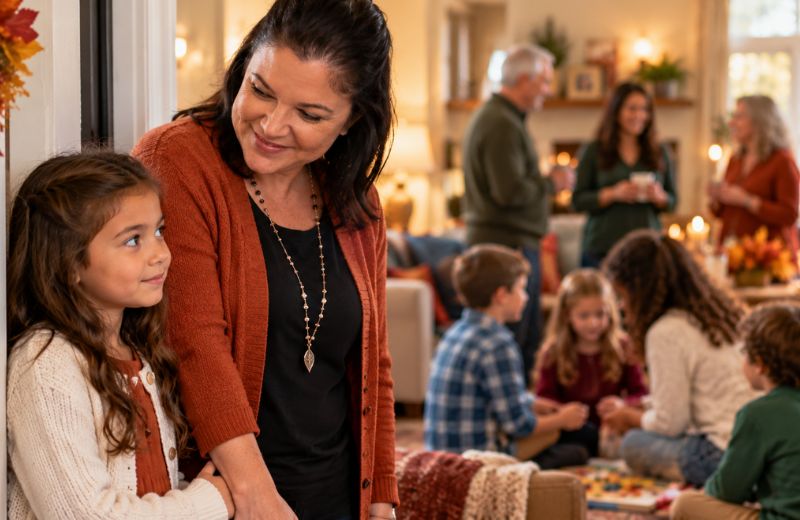
If you peeked through the windows of my grandparents’ house on Thanksgiving Day when I was a kid, you would have seen a house full of joyful Italians, a table overflowing with food and hardly any empty seats in the house. Cousins were laughing, everyone was crowded around the table, my father was being scolded for eating all the black olives, and somewhere in the middle of it all, we were talking about what we were thankful for. Thanksgiving really did feel wrapped in words like happy, grateful, and together. Those are the moments I remember most.
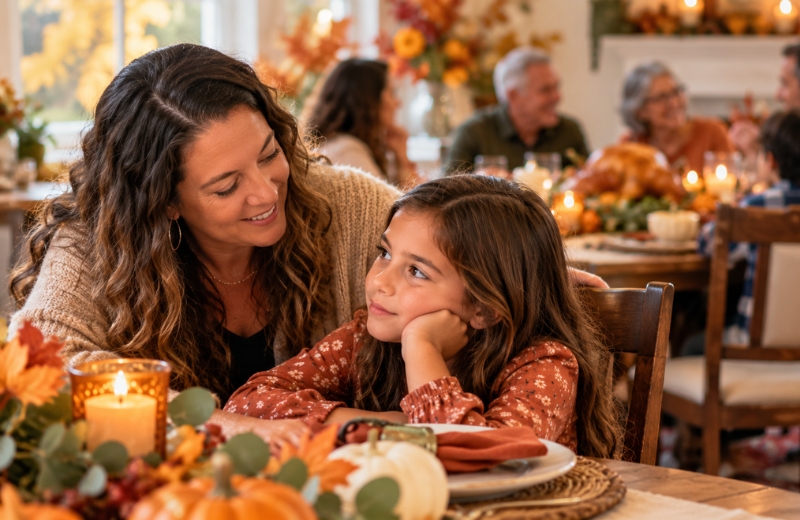
But as I’ve grown older, as a teacher and a mom, I’ve learned that Thanksgiving doesn’t look that way for every family, every child, or even every year. For some children, the table may not be overflowing with food. For others, someone important will be missing from the table. A parent may be deployed. A grandparent may have died. Parents may be divorced, which means a child spends Thanksgiving with one parent while missing the other. A family member may be sick or have to work. Older siblings may have moved away. Whatever the reason, the picture of Thanksgiving a child hopes for may not match the one they experience.
Sometimes, even happy changes can leave an empty chair.
This year, one of those chairs will be at my own Thanksgiving table. One of my daughters attends school in Ireland, where Thanksgiving is simply another Thursday. She will actually be sitting in class while we’re celebrating at home.
I’m incredibly grateful for the experience she is having. I’m excited for her. I’m proud of her. And I’m also sad that she won’t be sitting at our table. I’ll miss her. All of those feelings can exist at the same time.
Can Children Feel Happy and Sad at the Same Time?
Yes. Children can experience more than one emotion at the same time, especially during holidays and family transitions. A child can feel grateful for the people around them while also feeling sad, worried, disappointed.
They can be thankful for the people gathered around the table and still deeply miss someone who isn’t there. They can enjoy Thanksgiving and wish for something a little different. When we make room for both, we teach children that they don’t have to hide a difficult feeling in order to participate in a happy occasion.
During my years teaching third grade, Thanksgiving week always brought plenty of excitement. Children talked about cousins coming to town, Grandma’s pie, traveling, watching football, and of course, having a few days off from school.
But not every child joined those conversations in the same way.
For some, the holiday meant moving between two parents’ homes. Others weren’t doing anything special and even had parents who had to work. Some were missing someone they loved. I learned that asking a seemingly simple question like, “What are you doing for Thanksgiving?” could have a very different meaning depending on the child answering it.
For educators, that can mean using language that leaves room for different experiences: “If you celebrate Thanksgiving, is there anything you’d like to share about your plans?” or simply, “What are you looking forward to during your time away from school?”
When we are thoughtful with our questions and make room for more than one Thanksgiving story, we give children a richer way to understand gratitude, history, and one another.
Let Them Miss Who They Miss
When a child says, “I wish Mom were here,” “I miss Grandpa,” or “Thanksgiving isn’t the same without my sister,” our first instinct may be to make them feel better. We might remind them of all the people who are there or quickly point out something they can be thankful for.
When children tell us they’re missing someone, we don’t always need to make the feeling go away. Sometimes the most helpful response is simply to acknowledge it. Instead of saying, “Don’t be sad. Grandma would want you to have fun,” we can say, “I miss Grandma, too. What do you miss most about her?”
Instead of reminding a child that they’ll see their other parent in a few days, we can acknowledge, “You wish Dad could be here with us today.”
Those simple responses communicate: I hear you and I’m available to listen to you talk about how you’re feeling.
How Can You Help a Child Who is Missing Someone at Thanksgiving?
Families can create simple ways to remember or connect with the person who is absent, while allowing the child to decide how much they want to participate. Families can also find small ways to include the person who is missing.
- Make Grandpa’s favorite pie.
- Look at an old photograph and tell a funny story.
- Send a message or video to a deployed parent.
- Schedule a call with a sibling who is away.
- Let a child draw a picture or write a note to someone they’re missing.
This year, our family Thanksgiving won’t be quite the same without her sitting beside us, but that’s okay. I know my family will find a way to connect with my daughter in Ireland, even if our Thanksgiving dinner happens between her classes or when it’s already her nighttime.
There’s Room at the Table for Every Feeling
We can still laugh. We can eat too much pumpkin pie (pumpkin cheesecake in my house). We can tell ridiculous family stories and say what we’re grateful for. But we can also miss someone.
This Thanksgiving, ask, “How are you feeling about Thanksgiving this year?”
Then listen.
Continue the Conversation
Stories can give children an easier way to begin talking about feelings through the experiences of a character. Lily’s Cloudy Feelings, part of Labyrinth Adventures, helps children explore feelings and practice noticing what’s happening inside.
Explore Lily’s Cloudy Feelings

Julie Braumberger is Director of Education at Mind Body Align, a former third-grade teacher, and co-creator of Labyrinth Adventures. She draws on her classroom experience to develop practical whole child development resources that help children build self-regulation, emotional awareness, connection, and other skills they can use in school and beyond.