


Download or Listen to Article Audio
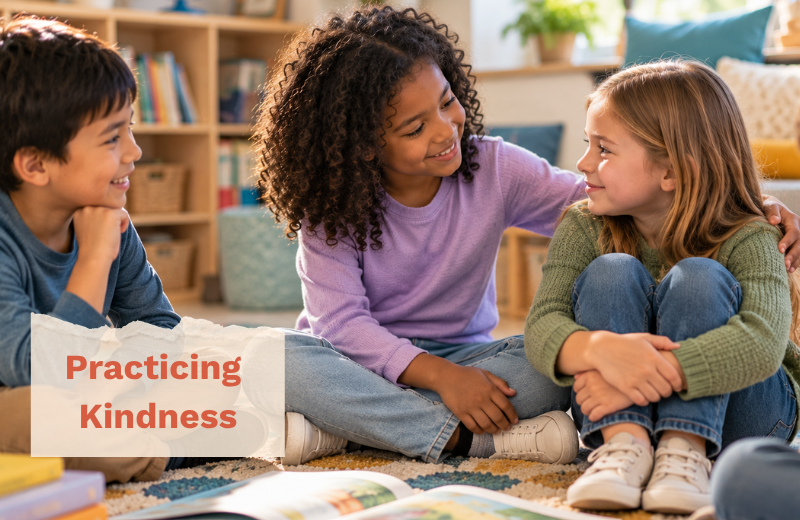
Kindness can look simple: holding a door, helping someone clean up, listening when a friend needs to talk. But those small choices give children opportunities to practice something bigger, noticing other people, considering how their actions affect others, and choosing how they want to respond.
How can you teach children kindness? Children learn kindness through everyday practice. Adults can model caring behavior, help children notice how others may be feeling, provide simple opportunities to help and connect, and talk together about how their choices affect other people.
Kindness Takes Practice for Adults, Too
I’ve noticed that the more I practice pausing before I react, the easier it is to choose kindness in everyday moments. That pause gives me a chance to notice what I’m feeling, consider my options, and respond with intention instead of impulse.
This matters most when life is not particularly calm. Who can be kind when the dogs are barking, each child needs something, and it has already been a long day? Taking a breath doesn’t make the chaos disappear, but it can give me enough space to choose patience instead of adding to it.
The same is true in traffic, at the grocery store, and even in conversations with the people around me. I can’t control what someone else does, or what is going on around me, but I can control my own response. I can pay attention to my tone of voice. I can offer a kind word, listen attentively, or choose not to let one frustrating moment determine what happens next.
Children learn this through practice, too. Kindness isn’t simply something we tell children to be. We can give them opportunities to notice, choose, reflect, and try again.
I’m reminded of this every time I teach a lesson about kindness. During one Cleo’s Cold Day lesson, children took turns choosing simple acts from our kindness bucket. One child pulled a prompt to tell someone they were a great friend. She immediately turned to the classmate beside her and said, “I love you.” Later, another child proudly held his paper upside down and announced “I love you!” to the whole class.
It was sweet and funny, but it was also a good reminder that kindness doesn’t have to be complicated. When we give children opportunities to think about it and practice it, they often find their own very genuine ways to show it.
Simple ways to practice kindness every day
Kindness practice doesn’t need to become another complicated activity on the schedule. Weave it into routines that already exist:
Model kindness
- Let children see the small ways you help, listen, thank others, and repair a mistake. When appropriate, name what you’re doing so they can connect the action with the intention behind it.
Pause and reflect
- At the beginning or end of the day, ask children to think about one kind thing they noticed, did, or could do. How might it have made someone feel? How did it make them feel?
Keep a kindness or gratitude journal
- Children can write or draw about a kind action they noticed, received, or offered. This can be as simple as sticky notes on the fridge or other visible spot for all to notice and appreciate. The goal is reflection, not keeping score.
Notice kindness specifically
- Instead of a general “Good job,” describe what you saw: “I noticed you helped your classmate pick up their papers. That was thoughtful.” Specific feedback helps children recognize what kindness can look like in everyday life.
Make kindness visible with a calendar or bingo challenge
A Kindness Calendar or Kindness Bingo can turn these ideas into an easy routine. Rather than treating kindness as a competition or tying it to prizes, use the activity as an invitation to notice and practice different ways of caring for others.
Kindness Calendar Ideas
- Monday: Offer to help someone clean up.
- Tuesday: Write a kind note to a friend or family member.
- Wednesday: Give someone a genuine compliment.
- Thursday: Choose a toy or book you no longer use and donate it with an adult’s help.
- Friday: Thank someone for something they did.
- Saturday: Make a card or picture for someone who could use encouragement.
- Sunday: Take a few slow breaths and think of someone you’re grateful for.
Kindness Bingo Ideas
Each box on the bingo card can represent a simple act of kindness. For example:
- Help a friend with their homework.
- Say “thank you” without being prompted.
- Share a toy or game.
- Give a hug to a family member.
- Pick up litter in the neighborhood.
The goal isn’t to earn a prize or complete the card first. Instead, see how many different ways children can find to practice kindness over a week or month.
Remember to check in and talk about what children noticed. Which acts felt natural? Which took more effort? Did someone respond in a way they didn’t expect? Reflection helps move the activity beyond simply checking a box.
Help children notice opportunities for kindness
Awareness is an important part of kindness. When children slow down enough to notice their own feelings, other people, and what is happening around them, they have more information to help them choose a response.
Stories are a great low-pressure way to practice.
During storytime, pause and ask:
“How do you think that character feels?”
“What makes you think that?”
“What could the character do next?”
“How does it feel when someone is kind to you?”
“What could you do if you notice someone needs help?”
These conversations let children explore empathy and problem-solving before they are in the middle of their own difficult moment. Over time, those small conversations can help kindness become something children recognize and choose for themselves.
How to Adapt Kindness Activities for Different Ages and Learners
Kindergarten to 2nd Grade
Younger children often benefit from concrete examples they can see and practice. They might help clean up a shared space, offer a specific compliment, draw a picture for someone, or talk about kindness during storytime. Rather than requiring one particular way to show kindness, offer choices so children can participate through words, pictures, gestures, communication tools, or helpful actions.
3rd to 5th Grade
Older elementary students can explore kindness with more independence. They might write thank-you notes or letters of encouragement, practice active listening, help with a classroom or community project, or brainstorm ways to make someone feel included. They can also think more deeply about intent, impact, and how kindness may look different depending on what another person actually needs.
Make participation flexible from the beginning. Children communicate, move, interact, and express care in different ways. A kindness activity should offer multiple ways to participate rather than requiring eye contact, smiling, physical touch, speech, or a particular type of movement. The goal is to help every child find authentic ways to contribute and connect.
Kindness grows in ordinary moments
We don’t need a special event to teach kindness. The best opportunities often happen in the middle of an ordinary day: someone drops their papers, a classmate feels left out, a sibling needs help, or we realize our own tone could use a reset.
When adults model kindness, give children opportunities to practice it, and make time to talk about what they notice, we help children build awareness, empathy, and connection one small choice at a time.
Do one kindness activity this week. Keep it simple, talk about what happened, and notice what children discover along the way.

Brooke Unger Educator at Mind Body Align. She earned a degree in Educational Assisting and a Behavior Management certificate from North Central State College. Her experience as an elementary school teacher’s aide showed her how attentional training, relationship-building, self-regulation, and practical life skills can positively transform a classroom. Brooke now writes articles and teaches young children while supporting Mind Body Align’s mission to create successful learning environments. She lives in Bellville, Ohio with her husband and two daughters.