


Download or Listen to Article Audio
Kindness can be easy to talk about and surprisingly hard to notice in the middle of a busy day.
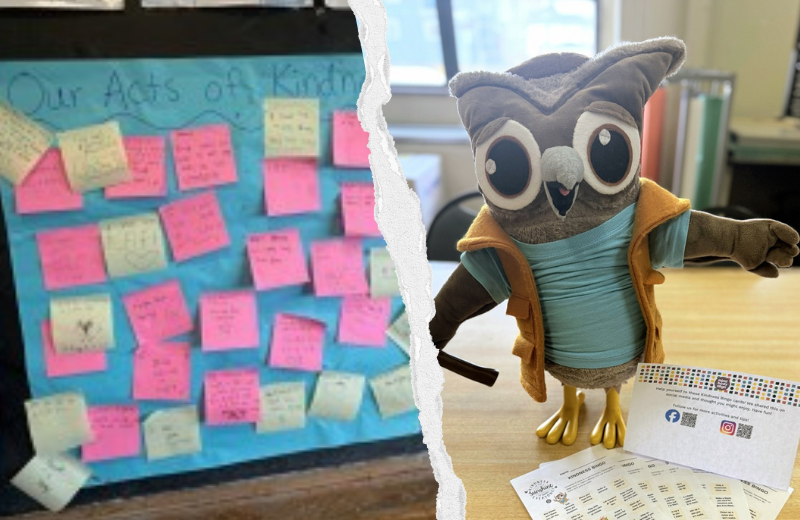
How does a kindness wall work? Children add notes, pictures, symbols, or short messages describing kind actions they noticed, received, offered, or would like to try. Teachers and caregivers can occasionally revisit the contributions and use them to start short conversations about empathy, relationships, and how our actions affect other people.
A child helps another student clean up without being asked. Someone makes room for a new friend at the table. A student notices that a classmate is struggling and offers help. These moments may only take a few seconds, but calling attention to them helps children recognize what kindness actually looks like in everyday life.
A kindness wall is one simple way to make those moments visible.
It requires very little preparation, can work with a classroom, library group, camp, after-school program, or family, and gives children an ongoing opportunity to practice important social-emotional learning (SEL) skills like awareness, empathy, communication, and connection.
Best of all, once the wall is established, children can help keep it going.
What is a Kindness Wall?
A kindness wall is a designated space where children can record kind actions they notice, receive, or offer.
It might contain sticky notes, drawings, cards, symbols, or short messages such as:
“Someone helped me find my book.”
“I invited someone to play.”
“She saved me a seat.”
The goal isn’t to keep score or reward the “kindest” child. It’s to help children notice.
When kindness becomes something children are looking for, they begin paying closer attention to the way people treat one another. That supports whole-child development by giving them opportunities to practice social awareness, relationship skills, communication, and responsible decision-making during ordinary parts of the day.
Research summarized by Harvard Health has found that both performing acts of kindness and intentionally noticing kindness may be associated with greater well-being. The article also highlights an idea that fits beautifully with this activity: kindness can become easier with practice.
Why Create a Kindness Wall?
During one of our summer camp lessons on kindness, I asked the children to share about a time when someone had been kind to them. The stories came easily. They weren’t describing huge gestures, they remembered everyday moments when someone helped, included, or cared for them. It reminded me that children are already surrounded by examples of kindness. Sometimes we simply need to give them a reason to stop and notice them.
For teachers and program staff, it also creates a shared language that can be revisited without adding another lengthy lesson to an already full schedule.
How to create a kindness wall
- Choose an easy-to-reach location
Pick a visible space where children can add something without disrupting the room. In a classroom, that might be a bulletin board or section of a whiteboard. In a library or after-school program, try a portable poster board or display near the meeting area. At home, a refrigerator or kitchen wall works just fine. It doesn’t need to be elaborate. The activity matters more than the display.
- Keep the supplies simple
You might use:
- Sticky notes, index cards, or scraps of colored paper
- Markers, pencils, or crayons
- Pre-made symbols or picture cards for children who prefer not to write
- A basket or envelope to collect notes when children can’t reach the display independently
This is one reason a kindness wall works well in busy programs: staff don’t need specialized materials or extensive training to use it.
- Explain what belongs on the wall
Tell children that the wall is a place to notice kindness. Encourage specific observations rather than general statements. Instead of “Maya is nice,” a child might write, “Maya helped me clean up when my blocks fell.” Specific examples help children understand that kindness is something we do, not simply something we are.
Children can write about kindness they:
- Saw
- Received
- Offered
- Would like to try
They can also draw pictures or use symbols. The goal is participation and reflection, not perfect spelling or handwriting.
- Make reflection part of the routine
The kindness wall becomes more meaningful when children occasionally stop and look at what has been added. You don’t need a long discussion. Spend two or three minutes during morning meeting, storytime, the end of the school day, or while children are waiting for pickup.
Choose a few notes and ask:
- What happened here?
- How do you think that person felt?
- What did someone notice?
- Have you seen something similar happen?
- What is one kind thing we could try today?
Those few minutes turn the wall from a display into an SEL activity.
They also give children a chance to practice social and emotional skills when things are calm. Skills like noticing emotions, considering another perspective, and choosing what to do next become more useful when children have opportunities to practice them before a difficult moment arrives.
How to Use a Kindness Wall in a Busy Classroom or After-School Program
A kindness wall shouldn’t become one more thing an adult has to manage.
Let children participate in maintaining it. Older children can help read notes, organize them, or add new prompts. Part-time staff, volunteers, substitutes, and caregivers can use the same simple routine: notice it, record it, talk about it.
It can also be especially useful during less-structured times of day.
Waiting for dismissal? Read two kindness notes.
Have five minutes before the next activity? Invite children to add something they noticed.
Need something meaningful for children who finish early? Let them draw or write about an act of kindness.
That flexibility makes the activity easy to repeat without sacrificing academic or program time.
Kindness Wall Prompts to Keep Children Interested
If the wall starts feeling repetitive, change what children are looking for.
Try prompts such as:
- Who helped someone this week?
- When did someone make you feel included?
- What is something kind you did without being asked?
- Who listened carefully to someone else?
- What is one way we took care of our classroom or home?
- When did someone help you solve a problem?
You can also give the wall a name that fits your group. “Acts of Awesome,” “Kindness Grows Here,” “Heartprints,” or a name created by the children can make the project feel like their own.
How to Adapt a Kindness Wall for Different Ages
A kindness wall should be flexible enough for every child to participate.
Kindergarten–Grade 2
Younger children may need prompts or support as they write about acts of kindness. Use simple, large icons or pre-written words like “helped,” “shared,” or “listened” that they can select and add to the wall.
- Storytime is also a natural place to practice. Ask children where they noticed kindness in the story or what a character could do differently next time.
- Story-based SEL can be especially useful because children get to think about emotions, choices, empathy, and problem-solving through someone else’s experience. Labyrinth Adventures uses stories and simple activities to give children opportunities to explore these skills together.
Upper Elementary (3-5):
Older children can be encouraged to reflect more deeply, describing how kindness made them feel and why they appreciated it. Ask questions such as:
- Why did that matter?
- How did someone know help was needed?
- Was the person’s intention the same as the impact?
Middle and High School Students:
Older students may benefit from using the Kindness Wall as a space for anonymous or collective acts of kindness. You could introduce journaling or group discussions to deepen their reflections and encourage more abstract expressions of kindness.
Make Kindness Activities Accessible for Every Child
Offer multiple ways to participate for children who communicate in different ways or who may not yet write independently. Children can express kindness through drawings, colors, symbols, stickers, or help from an adult.
A small activity that can support a bigger goal
A positive learning environment isn’t created by one poster, one lesson, or one perfectly behaved day. It’s created through repeated experiences.
Children practice noticing their emotions. They learn how their choices affect other people. They solve problems, repair mistakes, listen, include others, and try again. A kindness wall gives those moments somewhere to land.
For teachers, parents, and after-school staff, it is a simple activity that requires little preparation and can become part of routines already happening throughout the day.
For children, it is a reminder to look around and notice: How are we treating one another?
Over time, the wall itself may become less important than the habit behind it. Children begin looking for the classmate who helped, the friend who listened, the person who made room, or the small choice that made the day a little easier for someone else. They also begin to see that they have opportunities to make those choices themselves.
That’s the bigger goal. A kindness wall isn’t meant to create one week of extra-nice behavior or the prettiest bulletin board in the hallway. It gives children repeated opportunities to notice how their actions affect other people and how every member of a group contributes to its culture.
If you’re looking for a simple place to begin, put up a piece of paper, grab some sticky notes, and ask one question: What kindness did you notice today?
A positive learning environment is built in ordinary moments, one choice and one interaction at a time. A kindness wall simply gives those moments somewhere to land, and reminds us to keep looking for them.

Brooke Unger Educator at Mind Body Align. She earned a degree in Educational Assisting and a Behavior Management certificate from North Central State College. Her experience as an elementary school teacher’s aide showed her how attentional training, relationship-building, self-regulation, and practical life skills can positively transform a classroom. Brooke now writes articles and teaches young children while supporting Mind Body Align’s mission to create successful learning environments. She lives in Bellville, Ohio with her husband and two daughters.