


Listen or Download Article Audio
There is something about fall that naturally invites us to slow down. The days get shorter, warm blankets and pajamas come out, and suddenly curling up together with a good book sounds better than it did during the busy days of summer.
When my own daughters were young, some of our best family moments were the ordinary moments when we were together, talking, laughing, or sharing a story. That’s what makes a fall storytime tradition so special. Ten intentional minutes can become something your child looks forward to, and remembers for a long time.
How Can You Make Fall Storytime Special?
Fall storytime can be as simple as changing the setting, inviting children to participate in the story, choosing books that encourage conversation, and extending the experience with a small activity afterward. The goal is to make reading together feel like time worth slowing down for.
Make Storytime Feel a Little Different
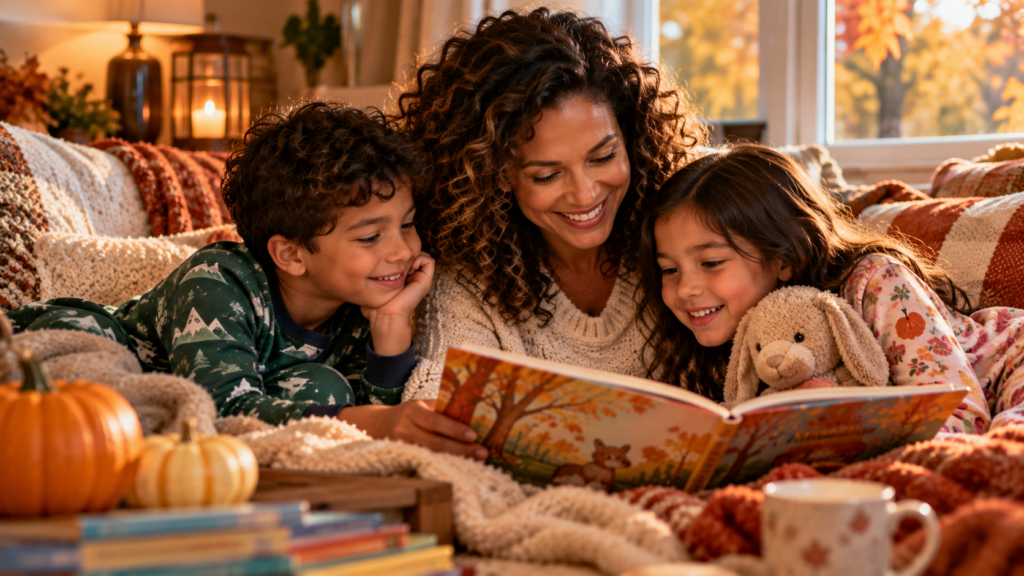
Start by changing one small thing about your usual reading routine. Turn off the lights and read by flashlight. Build a blanket nest on the floor. Put on cozy pajamas early and pile onto the couch. Read outside on a crisp afternoon or bring a book to the porch with a warm fall snack.
You might even create a weekly Pumpkins, Pajamas & Pages night. Let your child choose the book, grab a favorite stuffed animal, and settle in together.
Bring the Story to Life
Preschool and elementary-age children love to move, pretend, and participate. Instead of simply reading a story from beginning to end, invite your child into it. Ask, “Can you show me how that character is feeling?” Make the sound of the wind together. Pretend to creep through a dark forest. Act out what happens next. Pause before turning the page and ask, “What do you think they should do?”
Take a story walk after reading
Head outside and look for something that reminds you of the book. For example, a colorful leaf, a bird, an interesting cloud, or even a sound. Your child may make connections you never expected.
Choose Stories That Open the Door to Conversation
Books can also give children a comfortable way to talk about what’s happening in their own lives. This is something we intentionally build into our Labyrinth Adventures stories. The characters experience situations children recognize: waiting when waiting is hard, feeling frustrated when something doesn’t go as planned, noticing big feelings, showing kindness, or trying something new.
Lily’s Cloudy Feelings – Talk about emotions that come and go.
Oliver’s Waiting Game – Explore what children can do when waiting feels hard.
Lily’s Messy Masterpiece – Talk about mistakes, imperfections, and doing something for the simple joy of learning something new.
Tree’s Gratitude Garden – Explore gratitude as Thanksgiving approaches.
The conversation afterward doesn’t need to be lengthy. Ask one simple question: “Did anything in that story remind you of something that happened to you?” Then listen. Sometimes that is enough.
For additional ideas check out our article: How to Start Meaningful Conversations with Kids after reading.
Let One Story Keep Going
When the book closes, the experience doesn’t have to end.
- Drawing a favorite character.
- Acting out a scene.
- Making a snack inspired by the story.
- Building the setting with blocks.
- Asking what might happen to the characters tomorrow.
- Taking a short story walk.
These small extensions help children experience books as something more than words on a page. Stories become opportunities to imagine, wonder, talk, and connect.
A Tradition Worth Keeping
My children remember. They remember sitting close. They remember laughing when I used a silly character voice. They remember being able to tell me what they thought, and knowing I was listening.
So grab the pajamas. Find a pumpkin if you have one. Choose a favorite story and settle in.
The pages matter, but the time together matters even more.
If you enjoyed this article, join our mailing list for practical ideas, inspiring stories, and whole child development resources created to support educators, families, and the children they serve.
We’d be honored to continue learning alongside you.
Join the Mind Body Align Community

Julie Braumberger is Director of Education at Mind Body Align, a former third-grade teacher, and co-creator of Labyrinth Adventures. She draws on her classroom experience to develop practical whole child development resources that help children build self-regulation, emotional awareness, connection, and other skills they can use in school and beyond.