


Listen or Download Audio
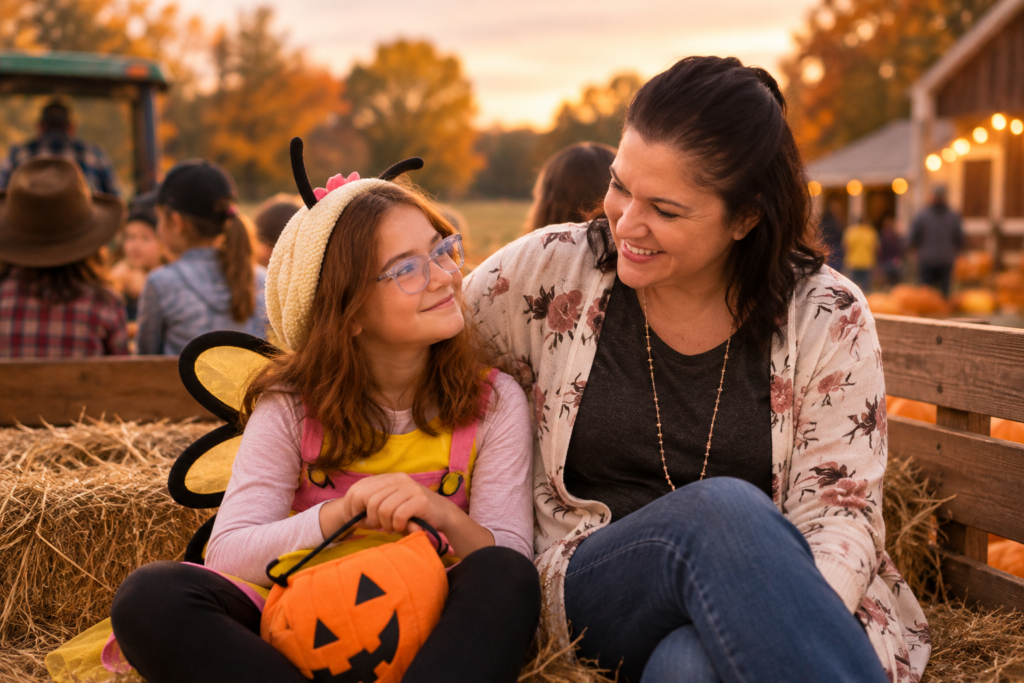
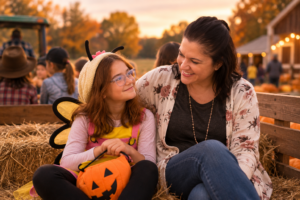
In second grade, my first year at a new school, I went to a Halloween party at a classmate’s farm. The entire class was there. I was the only child wearing a costume.
I was teased and laughed at. A boy stuffed hay down the back of my coat. But the hostess’s older sister helped clean me up and sat beside me on the hayride.
I still remember her kindness.
Thankfully, the experience did not ruin Halloween for me. I still love dressing up, although somewhere in the back of my brain lives the fear that I’ll arrive dressed as a homemade gumball machine while everyone else is wearing normal mom jeans. At least, I am better prepared to roll with it these days.
Kids remember moments when they feel different. They also remember the people who make those moments a little easier.
Halloween gives our kids plenty of opportunities to be that person.
How Can Kids Practice Inclusion at Halloween?
Kids can practice inclusion at Halloween by noticing who may be left out, inviting others to join, respecting different comfort levels and boundaries, and looking for small opportunities to show kindness. Parents and educators can help by talking through these situations before Halloween activities begin.
Help Kids Notice Who’s on the Edge
Halloween is full of little social situations. Who’s trick-or-treating together? Who got invited to the party? Who has matching costumes? Who’s hanging back?
We don’t need to turn this into a serious lecture. We can simply help children notice.
“It looks like she’s standing by herself. What do you think you could do?”
Maybe they invite someone to walk with them, make room at the table, slow down so someone can catch up, or simply say hello.
We practice this same kind of noticing in our Labyrinth Adventures lessons. In Cleo and the Stink Bugs, for example, children explore how words and actions affect others and practice responding with empathy and kindness. Those conversations give children a chance to think about what they might do before they’re in the middle of the real thing.
Remember That Halloween Feels Different to Every Child
One child can’t wait to run through the haunted house. Another won’t walk past the skeleton on the porch. One loves crowds. Another needs a break. Some children can’t eat the candy they’re offered because of food allergies or other dietary needs. Some don’t want to wear a costume or participate at all.
Different doesn’t mean difficult.
Before Halloween, you might ask, “What could we do if someone we’re with gets scared or wants to skip something?”
Children can also practice speaking up for themselves. Practice saying, “I don’t want to go in there.” “I need a break.” “No, thank you.”
Kindness includes respecting other people’s boundaries, and knowing our own are worth respecting, too.
Set Expectations Before the Excitement Hits
We also like to establish a few family rules before we head out. Like, how far ahead can you walk without me? Are we eating candy as we go or waiting until we get home? How much can you eat tonight? Are we staying with the group?
And in my family, saying thank you loudly and genuinely is non-negotiable. So is the Reese’s cup mom tax, due immediately.
Setting expectations ahead of time means fewer negotiations when everyone is excited, tired, and carrying five pounds of sugar.
Halloween Kindness Can Be Candy-Corn Sized
Halloween kindness doesn’t have to be a grand gesture.
Wait for the littlest trick-or-treater to catch up. Compliment someone’s costume. Make room for another child. Don’t tease someone who gets scared. Say thank you to the neighbor handing out candy. Accept a friend’s “no” to trading treats without demanding an explanation.
These moments are tiny. Candy-corn sized, even. But they add up. Halloween gives kids dozens of little chances to notice someone else, make room, show kindness, or speak up for what they need.
So yes, talk about sharing the candy. But also talk about looking around.
Who might want to join in? Who needs a little more room? Who needs a break? What do you need to enjoy tonight?
Because years later, your child won’t remember every piece of candy in their bucket, but they just might remember who sat beside them on the hayride.

Brooke Unger is an educator and writer with Mind Body Align with experience as an elementary school teacher’s aide. She works directly with children and shares practical strategies that help educators and families support self-regulation, emotional awareness, and readiness to learn.